
Affiliate Disclosure: Outside Women may earn a small commission from affiliate links in this article at no extra cost to you. We only recommend gear and resources we genuinely believe support women in the outdoors.
Whether you’re new to stand-up paddleboarding or have been SUPing for some time, the more you know about water safety, the better, and knowing how to navigate the wind is an important factor. Getting caught in strong winds while out on the water can be scary, but with the right gear and wind safety knowledge you can get through it!
I’ve been stand-up paddleboarding consistently for about eight years now, and within that time I’ve only had a couple of memorable challenging situations with the wind. One time I should have double-checked the wind forecast the morning of and caught the beginning of a freak high sierra mountain storm that came in and did some serious damage in the next 24-hours.
Another time I took my SUP out at a large bay and boating traffic quickly picked up. By the time I was making my way back, it was super difficult to find a break in the boats to cross a section of the bay.
Take these tips that I’ve learned from research and experience for stand-up paddleboarding on windy days, starting with how to read the wind forecast.
Stand‑Up Paddleboarding in Windy Conditions: Safety Tips, Wind Speeds, and How to Read the Forecast

How to read the wind forecast
The wind is usually calmer in the morning, stronger in the afternoon, and calm again in the evening. For many places it’s typical for the wind to pick up around 10:30 am, get stronger around noon and as the day goes on until around 4 pm when it’s common for the wind to start to decrease. This isn’t the case for everywhere, every day, but gives you an idea of the general pattern of wind strength.
Here’s a screenshot from the weather app on an iPhone. Plug in the closest location to where you want to paddle, navigate to the day you want to paddle, then scroll down and click on the wind forecast to see a more detailed, hourly report.

We see that the wind is forecasted to be at its strongest between 1 PM – 5 PM, and the max gusts of 22 mph is unmanageable for SUPing.
You see the shaded in bump – that’s the steady wind forecast, that we see tops out around 12 mph and is shown in the headline 2-12 mph headline. The line above it shows the speed of wind gusts, which aren’t as consistent as the steady wind, but equally as important as you read the forecast.
How much wind is too much for stand-up paddleboarding?
Safe wind speed for stand-up paddleboarding
If the steady wind is up to 10 mph or 11 knots, conditions can be difficult for stand up paddleboarding. From my experience, this is my cut-off, but yours could be higher or lower, which you’ll learn over time. I prefer to SUP when the steady wind speed is 9 mph or less.
As you’re making plans to paddle, be sure to check the hourly wind report as we just covered. Or if you don’t want to play weather girl and would prefer a clear ‘yes’ or ‘no’ for your judgment call, check out Windy.app, designed for water and wind sports. This app gives a clear signal: green checkmark for good, and red X for bad.

Surfline is another app that provides wind forecasts for water sports. On this website and app you see the wind is measured knots, instead of mph. Here’s the conversion if you choose to use Surfline.
Wind knots vs mph SUP
- 1 knot ≈ 1.15 mph
- 11 knots ≈ 12.7 mph
- 20 knots ≈ 23 mph
- 30 knots ≈ 34.6 mph
Now that you have the resources you need to check the wind forecast, here are SUP wind safety tips.
Hug the shoreline to block the wind
To protect yourself from the wind on your SUP, don’t paddle out into the middle of the open water. The wind will be the strongest in the middle of a lake, bay, or ocean. Plan your route alongside the edge, not the middle. Hug the shoreline, the docked boats in the harbor, and other structures to help block the wind.
Wear a SUP leash
When winds pick up and the water is choppy, there’s a greater chance that you’ll get knocked off your stand-up paddleboard. Wearing a leash will keep your SUP by your side if you end up going for an accidental swim. Most inflatable SUPs come with a leash. If yours doesn’t, or you bought an epoxy SUP, you can find a SUP leash online or at your local shop.
Unlike surfboard leashes, SUP leashes usually have a coiled section to prevent the leash from dragging in the water behind you. Leash length is also important – don’t use a surfboard leash that’s not designed for a SUP – these are typically shorter for surfboards, and don’t have the coil design.
Epoxy SUPs are heavier and more stable than inflatable SUPs
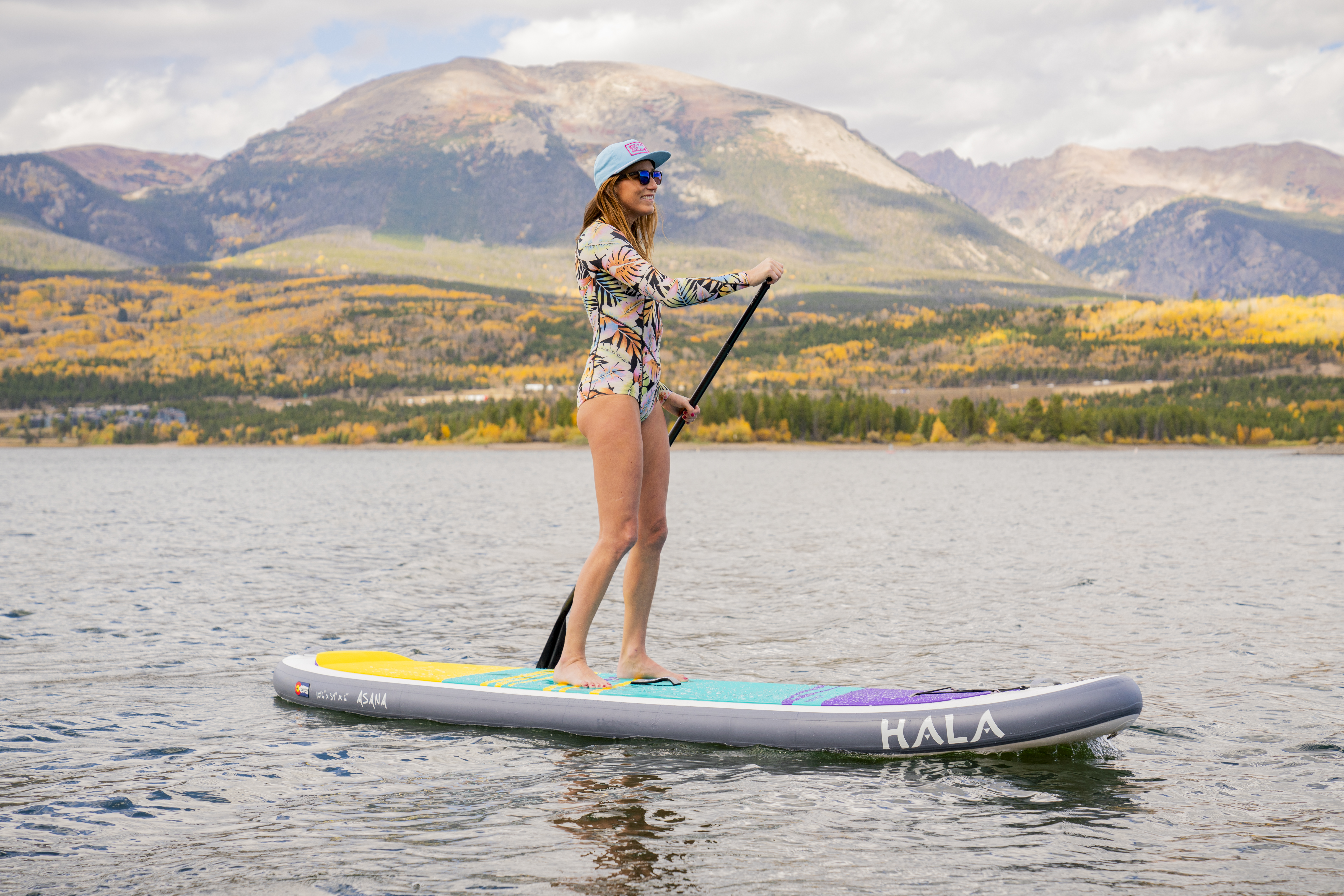
Inflatable SUPs are convenient for a lot of things, including packing it up and hiking out to a more secluded launch spot. But when it comes to the wind, epoxy SUPs provide more stability with the heavier weight. What do I mean by epoxy SUP? These SUPs are constructed with a foam core and layers of epoxy – a durable material that prevents dings and other damage. This is the most common SUP construction – if the board is heavy and not inflatable, it’s probably epoxy.
Inflatable SUPs can handle the wind, but if you’re typically paddling in a windy location, you may prefer the heavier weight of an epoxy stand-up paddleboard.
Paddle on your knees if you get nervous
If you’re feeling unstable and you’re not getting any leverage while standing and paddling, drop down to your knees to paddle until you get out of the worst of the wind. When first starting out, it’s common to see stand-up paddleboarders on their knees, or sitting down.

If you want to get the full experience and joy of the sport, I highly recommend working towards standing. But when the wind blowing you around, dropping to your knees can help you feel more balanced and less shaky.
Don’t forget this one thing when you’re paddling from your knees.
Be sure to hold the paddle handle for maximum leverage
Technique and mechanics matter, especially in the wind. Sometimes you’ll see people on the water holding the paddle incorrectly, placing their top hand on the shaft of the paddle instead of the handle. This causes the paddler to lose leverage and makes it way more difficult to get a strong stroke in, especially when the wind is howling.
If it gets windy and you’re paddling on your knees, you probably can’t reach the handle. Fix this by adjusting the length of the paddle. Most paddles are adjustable and can be collapsed when you’re on the water.
Bring and wear a life vest
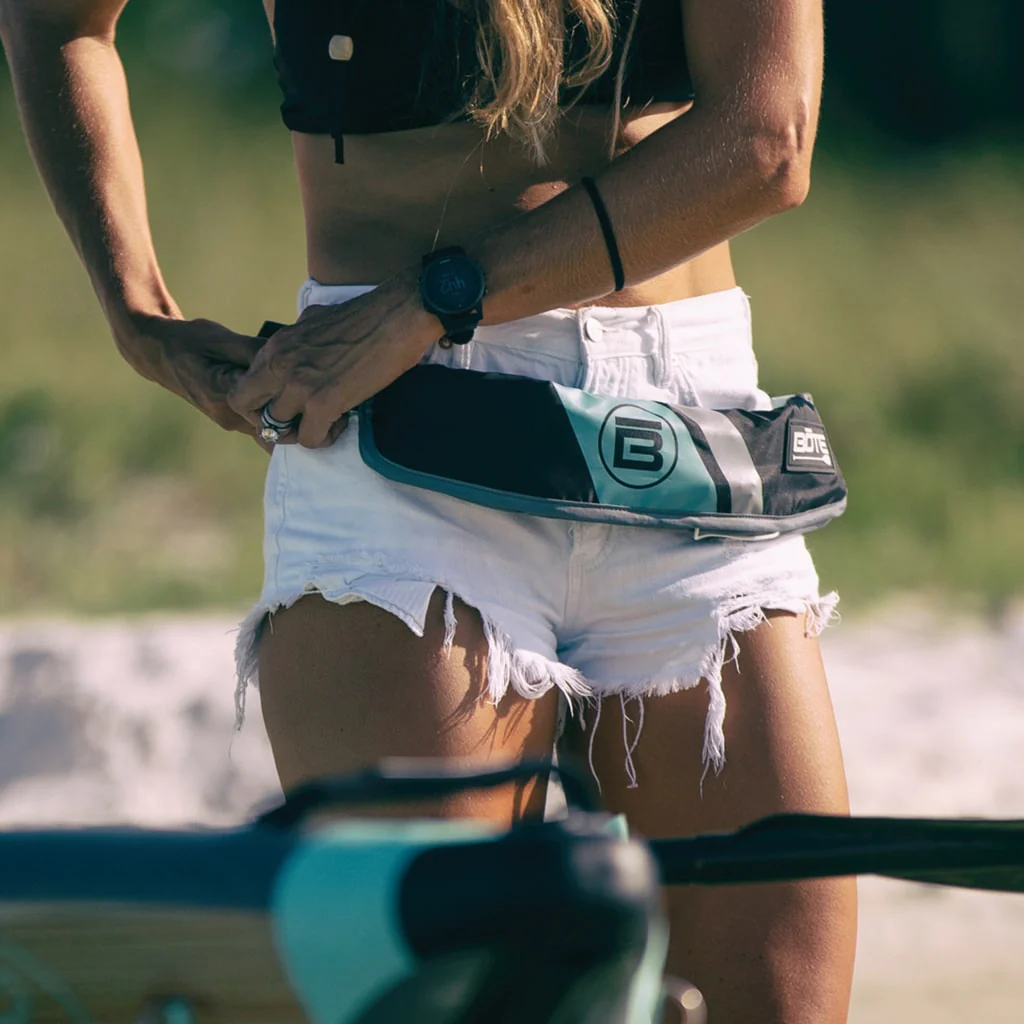
Many areas require stand up paddleboarders to bring a life vest, but even if it’s not required, it’s best to bring one with you and wear it when you feel uncertain about the wind. Inflatable waist belts make it comfortable and convenient to have a personal floatation device (PFD) right when you need it. BOTE, NRS, Bombora and other brands have attractive and comfortable options to choose from – check REI and other outdoor retailers.

If you prefer to bring a full size life vest, stash it under the tie downs on the front of your SUP to make it easy to grab. If you don’t have tie downs, you can buy them for cheap online. This gear helps in windy conditions.
When to cut across the water
So how do you navigate the wind on the water? If you’re paddling a bay or lake on a windy day and you need to cross a large section of water to get back to your launch spot, find the shortest distance to do so – the path of least resistance! Note which direction the wind is blowing and determine if the wind may push you past your target spot across the water. If so, you might need to paddle up the shore a bit before crossing.
Get the timing right as best as you can – check to see what boats and watercraft are approaching. Boats have the right of way, and people on SUPs need to do their best to stay out of their path. They also leave a wake behind, making the situation even trickier to navigate. If possible, give yourself a few minutes to rest before giving it your all to get across the water on a windy day.
SUP with friends
If you’re nervous about the wind, or exploring a new spot, invite friends to go with you to increase your safety in numbers. Stay together and look out for each other, sharing tips and support when someone gets nervous. Today, nearly half of stand-up paddleboarders are women, according to Paddling Magazine, which is awesome!
Talk to other women you see on the water and search for Facebook groups for SUP and paddle in your area. There’s a Stand Up Sisters Facebook group in greater Sacramento, a Girl Paddlers group, PNW Paddleboarders and more.
Here’s what to remember:
Safety tips for stand up paddleboarding in the wind
- Check the wind forecast using Surfline, Windy, or other weather apps
- Avoid the strongest wind by paddling in the morning or evening
- Hug the shoreline to block the wind
- Grip the paddle handle to maximize leverage
- Paddle on your knees if you feel unstable
- Wear a leash to keep the SUP close to you
- Bring and wear a life vest or inflatable waist belt PFD







Leave a Reply